Pre-Solar Roof Survey Check the Roof Before the Panels
Solar panels last 25 years and cost £2,000 to £3,000 to take off and refit if the roof under them needs work. The installer's 'free roof survey' was a salesperson looking up from the drive. Before fixing panels to a 1970s concrete tile roof, find out from someone with no panels to sell whether it has 25 years left and what re-roofing first would cost.
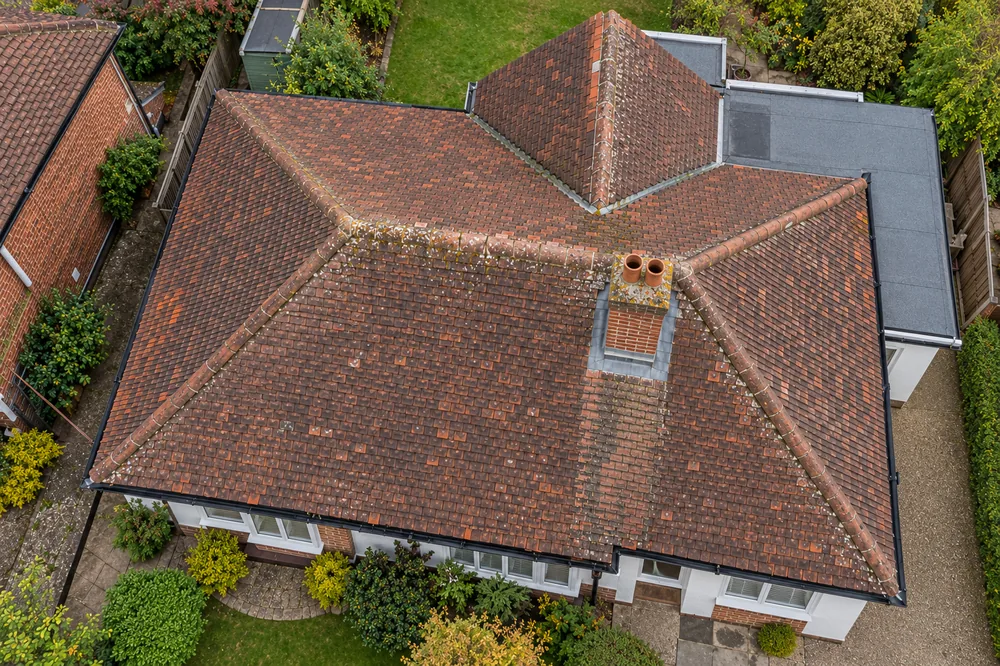
Pre-Solar Roof Survey explained
A pre-solar roof survey assesses whether a roof is fit to carry solar panels for their 25-year life. It grades the covering, estimates remaining life, inspects the rafters and battens from the loft, notes the fixing zones and identifies defects that should be repaired before installation. Independent of any installer. £299, report within 48 hours.
Last reviewed by Matt Novell
Why survey the roof before installing solar panels?
Because the panels will outlast many of the roofs they are fitted to. A solar array is warranted for 25 years. A 1975 concrete tile roof has a design life of 40 to 60 years and may have ten left. Removing and refitting an array to re-roof costs £2,000 to £3,000. Fix the roof before the panels go on.
Installers do not carry out roof surveys in any meaningful sense. The surveyor who visits before the quote is checking the roof orientation, shading, the available area and the route for cables. They are not grading the covering or looking at the rafters from the loft. Their interest is in whether the array can be fitted, not whether the roof will last. Some will mention a slipped tile if they see one from the ground; none will tell you the remaining life.
Once the panels are on, the roof underneath cannot be inspected or maintained. Moss builds up under the array edges, a cracked tile under a panel goes unnoticed, and a leak that develops under the array is expensive to find. A roof that goes on with Grade 2 defects beneath the panels carries those defects for 25 years.
The survey answers one question first: does this roof have 25 years in it? If yes, install. If no, re-roof first and install on the new covering, where the fixings can be designed in and the installer's warranty is clean. If marginal, the report gives the repairs that would make it a yes.
Can my roof take the weight of solar panels?
A typical domestic array of 10 to 14 panels adds 150 to 250kg to one slope, around 12 to 20kg per square metre, which most pitched roofs built to Building Regulations can carry. The questions are whether the rafters and battens are sound, whether they have been cut or notched, and whether a heavier covering has already been substituted.
We inspect the rafters from the loft: size, spacing, condition, any sagging between purlins, any evidence of historic alteration or cutting for a water tank, a loft ladder or a previous conversion. We note the batten condition where visible, because the panel hooks are fixed to the rafters through the battens and a rotten batten gives a loose hook. We also record whether the covering is the original or a heavier replacement, such as concrete tiles on a roof framed for slate, which is common on Victorian houses and has already used up some of the structure's margin.
We are not structural engineers and the report does not contain a load calculation. It records the structure's visible condition and states whether we see anything that should be referred to an engineer before fitting an array. On most post-war houses with no alteration the answer is no referral needed. On older houses with undersized or altered timbers, or where a heavy covering has been substituted, we say so and the installer or an engineer takes it from there.
The report also records the flat roof structure where panels are proposed on a flat roof, because ballasted systems add far more weight than hooked systems and a felt roof on a timber deck is often not suitable.
- Rafter size, spacing and condition from the loft
- Evidence of notching, cutting or alteration
- Batten condition where visible
- Original versus substituted heavier covering
- Sagging, deflection or purlin issues
- Referral to an engineer stated if warranted
Where will the panel fixings go and will they leak?
Roof hooks are fixed through the tile course to the rafters, and a tile is often ground to accommodate the hook. Done well, the hook sits below the tile and the roof is weathertight. Done badly, the hook holds the tile up, the tile cracks or the fixing misses the rafter. The survey records rafter positions and covering type.
Plain tiles and slates are harder to fix through than interlocking concrete, because they are smaller and the hook has to be dressed in with more care. Slate roofs normally need a flashing kit or replacement slates with a lead soaker at each hook, and an installer who treats a slate roof like a concrete one will create leaks. The report states the covering and flags the fixing method that suits it, so you can ask the installer how they intend to fix before you sign.
The report also marks the roof plan with the elements the array will cover and the elements it will border, so defects on the valley or hip next to the array can be repaired first. A Grade 2 lead valley that would normally be a 12-month item becomes an immediate item if an array is about to be fitted beside it.
If you already have panels and suspect a leak at a fixing, the leak detection survey is the right product, and we photograph each hook from above to find the one that has cracked its tile.
Should I re-roof before installing solar?
Re-roof first if the remaining life of the covering is under 15 years, if the felt or battens are failing, or if the covering cannot be fixed through cleanly. Install now if the covering is Grade 1 with 20 years or more remaining and the structure is sound. Between those, repair the Grade 2 items first and then install.
The economics are simple once the facts are known. A re-roof on a typical semi costs £4,000 to £15,000 depending on size and material. Removing and refitting an array to re-roof later costs £2,000 to £3,000 on top of that, plus the lost generation while the panels are off and the risk to the installer's warranty. If the roof will need replacing within the panel's life, the £2,000 to £3,000 is a cost you can avoid by sequencing the work correctly.
There is also the integrated option. On a re-roof, panels can be fitted in-roof, replacing a section of tiles rather than sitting on top of them. That looks better, costs less in tiles and removes the fixing-through-covering risk. It is only possible when re-roofing, which is another reason to make the roof decision first.
The report gives the remaining-life estimate with the reasoning, the grades and the costs, and ends with a one-paragraph opinion: install, repair then install, or re-roof then install. That is the paragraph to put in front of the installer.
What does the pre-solar roof report contain?
The Full Roof Condition Report with a solar section added. The solar section marks the proposed array on the roof plan, grades the elements under and beside it, states the covering and fixing approach, records rafter and batten condition, gives remaining life against the 25-year panel life, and ends with an install, repair-first or re-roof-first opinion.
The drone photographs of the array slope are taken at close range in a grid, so that the installer and you have a record of every tile in the fixing zone before the work. If a tile is cracked after installation, the before photograph shows whether it was cracked before. That protects you and a good installer equally.
The loft section records the rafters in the array zone individually where visible, with their spacing measured from the hatch where that is possible without walking on joists. Installers need rafter positions to plan hooks, and knowing in advance that the rafters are at 600mm centres rather than 400mm changes the mounting rail design.
The report is addressed to you and can be forwarded to any installer. It carries our independence statement: we do not sell, fit or recommend solar systems or installers, and no installer pays us. The opinion on whether to install is based on the roof alone.
What happens if I install solar on a roof that needed work?
The common outcomes are a leak under the array within a few years that costs more to find and fix than the repair would have, a roof that fails mid-warranty and needs the array removed and refitted at £2,000 to £3,000, or a dispute with the installer about whether a defect was pre-existing. All three are avoidable.
Leaks under arrays are the complaint we hear most. The panel hook cracked a tile, the installer's foot cracked another, a slipped tile that was already there is now under a panel, and the water appears on a bedroom ceiling eighteen months later. Finding the entry point means lifting panels, and the installer and the roofer each say it is the other's fault. A pre-install report with grid photographs of every tile in the zone settles that argument before it starts.
Removing an array to re-roof is also where buyers of houses with solar get caught. A buyer's survey finds a tired roof under ten-year-old panels and the price negotiation includes the removal and refit as well as the re-roof. Owners who are planning to sell within the life of the panels should weigh that.
If you already have panels and a roof concern, we can inspect what is visible: the slopes around the array, the fixings from above, the loft beneath. We cannot see under the panels and the report records that limitation. The decision to remove panels for a full inspection is yours, and the report tells you whether the visible evidence justifies it.
What does the report cover?
- Drone grid photographs of every tile in the proposed array zone
- Grades for the array slope and the elements beside it
- Covering type and recommended fixing approach for that covering
- Loft inspection of rafters and battens in the array zone, spacing noted where measurable
- Evidence of alteration, notching or substituted heavier covering
- Statement on whether an engineer's referral is warranted
- Remaining-life estimate for the covering against the 25-year panel life
- Defects to repair before installation, costed in bands
- Re-roof cost band for comparison with later removal and refit
- Install, repair-first or re-roof-first opinion
- Full graded condition report for the whole roof
- Independence statement: no solar sales, installation or referrals
From booking to report in four steps
Book before you sign
At /book/, choose the Full Roof Condition Report and note that solar is proposed. Attach the installer's layout drawing if you have one so we know the array zone.
Drone grid and loft
Close-range photographs of every tile in the array zone, the rest of the roof, and the rafters and battens from the loft. 60 to 90 minutes, nobody needs to be home for the external work.
Report in 48 hours
Remaining life against 25 years, fixing zone condition, defects to repair first and a plain opinion: install, repair first or re-roof first.
Give it to the installer
Forward the report. Ask the installer to confirm the fixing method for your covering and to address any repair-first items. Keep the grid photographs as your pre-install record.
What does a roof survey cost?
Prices include travel within 30 miles of Fleet. Zone 2 adds £40, Zone 3 adds £80. Add thermal leak tracing for £75, a second building for £99, or a 24-hour turnaround for £50. Card payment on booking; the report is released on payment.
Drone Roof Report
Drone survey of every slope, ridge, valley, flashing and chimney. Photographed defect schedule with condition grades. PDF in 48 hours.
Book this reportFull Roof Condition Report
Drone survey plus loft inspection, gutters and fascias, costed repair schedule and remaining-life estimate. Our most-booked report.
Book this reportPre-Purchase Roof Report
Full report plus a one-page lender summary and a 15-minute call to walk you through it before exchange. 24-hour option available.
Book this reportFull breakdown on the roof survey cost page. Questions? Call 01252 447 731.
Report required by your lender or solicitor?
Send us the valuer's wording or the solicitor's request when you book. We address the report to whoever needs it, quote their condition on page one, and answer it directly. Call 01252 447 731 if the mortgage offer has a deadline and we will prioritise the slot.
Other roof surveys we carry out
Pre-Purchase Roof Survey
A pre-purchase roof survey is an independent inspection of a house you are buying, carried out before exchange of contracts.
Read moreRoof Survey for Mortgage
A roof survey for mortgage purposes is an independent inspection ordered because the lender's valuer has flagged the roof.
Read moreRoof Condition Report
A roof condition report is an independent document describing the condition of every roof element, graded 1 to 3 on a traffic-light scale, with numbered photographs, a costed repair schedule in bands and a remaining-life estimate.
Read moreDrone Roof Survey
A drone roof survey is a close-range photographic inspection of a roof from the air by a CAA-registered operator.
Read moreRoof Insurance Claim Report
A roof insurance claim report is an independent, photographed record of roof damage prepared to support a buildings insurance claim.
Read moreSpray Foam Roof Inspection
A spray foam roof inspection records the type of foam applied under a roof, open or closed cell, the proportion covered, whether the rafters and felt beneath can be inspected, evidence of damp or decay, and ventilation.
Read moreLandlord Roof Inspection
A landlord roof inspection is an independent, graded condition report on a rented property's roof, loft and gutters, used to evidence compliance with Section 11 of the Landlord and Tenant Act 1985 and the Homes (Fitness for Human Habitation) Act 2018, to plan maintenance and to answer tenant damp reports.
Read moreRoof Leak Detection Survey
A roof leak detection survey traces water entry from the ceiling stain back to the external defect.
Read morePre-Solar Roof Survey
A pre-solar roof survey assesses whether a roof is fit to carry solar panels for their 25-year life.
Read morePre-Solar Roof Survey questions
The installer's survey checks orientation, shading, area and cable routes. It does not grade the covering, estimate remaining life or inspect the rafters from the loft, and the person doing it is paid when panels are sold. Ask them for a remaining-life estimate for your roof. If they cannot give one, the roof has not been surveyed.
At least the warranty life of the panels, usually 25 years, or close to it. A covering with 20 years or more and a Grade 1 condition is a clear install. Under 15 years, re-roof first. Between, repair the Grade 2 items before installation. The report gives the estimate and reasoning; the decision is yours.
Correctly fitted to a sound roof, no. The risks are hooks that crack tiles, hooks that miss rafters, installers walking on fragile tiles, and existing defects being sealed under the array. The pre-install grid photographs record every tile in the zone, so later damage can be attributed. A sound roof carries an array for decades without issue.
No. We record the rafter size, spacing and condition, alteration, batten state and whether a heavier covering has been substituted, and we say whether anything warrants referral to a structural engineer. On most post-war houses no referral is needed. Where it is, the report gives the engineer the visual record to work from.
Yes, with the right fixing method. Slate and plain tiles are smaller and need the hooks dressed in with flashings or replacement slates and soakers. An installer using interlocking-tile methods on slate will cause leaks. The report states the covering and the fixing approach it needs so you can check the installer's proposal before signing.
We inspect what is visible: the slopes around the array, the fixings and tiles at the array edges from above, and the loft beneath for staining or hook penetration. We cannot see under the panels and the report says so. If a leak is suspected under the array, the leak detection survey traces it to the likely hook.
Sometimes. Ballasted frames add far more weight than pitched-roof hooks, and a felt covering on a timber deck is often unsuitable. GRP or EPDM on a concrete or well-built timber deck can work. The report records the covering, the deck where visible, ponding and upstand condition, and states whether an engineer should be consulted before loading.
No. We have no relationship with any installer, roofer or solar company, and nobody pays us for referrals. That is what makes the opinion in the report worth having. We will tell you what to ask an installer about fixing method and roof protection, but the choice of installer is yours.
Where we carry out roof surveys
Based in Fleet, Hampshire, covering a 90-mile radius in three travel zones. Every town below has its own page with local housing stock, what valuers flag there and drone access notes.
Why not just ask a roofer?
A roofer looks at a roof to price the work they would like to do on it. That is not dishonesty, it is the job. An independent report has no work attached: every finding is graded against a fixed scale, photographed, and costed in bands so you can take it to any contractor, lender or insurer. We never quote for repairs and we have no referral arrangement with anyone who does.
If the report does find work, you choose the roofer. We will tell you what a fair price band looks like for each item, which is often the most valuable page in the document.
Based in Fleet, Hampshire · covering Hampshire, Surrey, Berkshire, Sussex and the South
Phone: 01252 447 731
Email: [email protected]
Hours: Mon–Fri 8am–6pm · Sat 8am–1pm
Reports: PDF within 48 hours of inspection
Book your pre-solar roof survey
Fixed price, independent, PI insured, report in 48 hours. Book online in two minutes or call to talk it through first.
01252 447 731